

How Can You Understand Yourself Better?
The Enneagram collects us into 9 types, providing insight into why you behave the way you do, and what drives you. Different types might show the same behaviour, which can be driven by different motivations. When you understand yourself and your motivation to do things differently, you can change your relationship with others and with yourself.
Let me introduce you to the 9 different types.
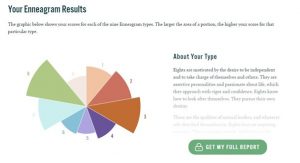
Here is a brief description of each of the 9 types. Read through them all before you make any decisions about which may apply to you!
One: The Perfectionist
Perfectionists are motivated by the need to live the right way. This includes improving themselves, others and the world around them. They try to avoid criticism by doing things perfectly. Ones have a strong inner critic or conscience; they live by an internal list of rules and discipline themselves to do what they should do. Healthy Ones are self-disciplined, hardworking, organized, conscientious, and productive. They have high standards and moral principles. Unhealthy Ones display the negative aspects of their type and be rigid, inflexible, controlling, self-righteous, overly serious, and hypercritical of themselves and others.
Two: The Helper
Helpers are motivated by the need to be loved, appreciated and needed. They take pride in their ability to make people feel special and to anticipate and fulfill other people’s needs better than anyone else. They appear cheerful, self-sufficient and confident and are often unaware of their own needs. Healthy Twos are warm, generous, empathic, enthusiastic and nurturing. They relate easily to people, enjoy giving to others and are capable of unconditional love. When displaying the negative aspects of their type, unhealthy Twos can be manipulative, clingy, indirect, possessive and preoccupied with gaining approval.
Three: The Achiever
Achievers are motivated by the need to be productive, efficient, admired and successful at whatever they do. Avoiding failure is very important to them. Life is a series of tasks and goals to be completed and they keep pushing themselves to achieve more. They are often disconnected from their deeper feelings and lose an inner sense of themselves. Healthy Threes are energetic, charming, optimistic, confident, self-assured and competent. They make good leaders who motivate others to live up to their potential. Negative aspects of unhealthy Threes can lead them to be vain, overly competitive, deceitful, superficial, opportunistic and prone to putting on facades to impress people.
Four: The Romantic
Romantics are motivated by the need to understand and express their deepest feelings and to discover what is authentic in themselves. They want to feel special and unique; and avoid being seen as ordinary. Their attention is focused on whatever is missing, distant and idealized. Healthy Fours are imaginative, sensitive, intuitive, creative and compassionate. They are introspective, self-aware, and in touch with the hidden depths of human nature. Unhealthy Fours displaying the negative aspects of this type can be self-absorbed, hypersensitive, impractical, self-loathing, moody, depressed and envious of those who seem more fulfilled than they are.
Five: The Observer
Observers are motivated by the need to gain knowledge and to be independent and self-sufficient. They observe life from a distance, guard their privacy and space, avoiding being engulfed by others. They feel safer and in control when thinking and analysing than when being in or exploring their feelings. They are individualistic and not influenced by social pressure or material possessions. Healthy Fives are objective, focused, calm, perceptive, insightful and curious. They have ingenious insight. Unhealthy Fives will display their traits negatively by being intellectually arrogant, withholding, controlled, cynical, negative and standoffish.
Six: The Questioner
Questioners are motivated by the need to feel secure and in control and to have safety and predictability. Feeling a sense of belonging and finding someone trustworthy to depend on is important to them. Tried and tested laws, norms, or rules help them to feel safe. Sixes often look to a person, group, or cause to identify with and to depend upon for protection. Sixes are careful and cautious of life’s dangers and potential attacks. Sixes have an ambivalent relationship to authority. They often distrust and are suspicious of it yet are not comfortable being seen as the authority themselves. Some Sixes are phobic and withdraw to protect themselves, whereas others are counterphobic and confront fearful situations head-on. Healthy Sixes are trustworthy, responsible, alert, insightful, loyal, compassionate and sympathetic to underdog causes. Unhealthy Sixes can display the negative aspects of their traits, being hypervigilant, indecisive, defensive, testy, self-defeating, paranoid and preoccupied with worst-case scenarios.
Seven: The Adventurer
Adventurers are motivated by the need to be happy and to stay busy by keeping their options open and constantly making plans for new experiences. They view life as a fun-filled adventure, yet they also want to contribute to the world. Boredom, suffering, painful emotions and the everyday drudgeries of life are avoided. Sevens are constant seekers of excitement. Healthy Sevens are optimistic, enthusiastic, spontaneous, idealistic, curious, generous and often multitalented. They uplift and enliven others and are fun to be around. Negative trait aspects of unhealthy Sevens are being self-centred, self-indulgent, insensitive, narcissistic, hyperactive, undisciplined and having problems with completion and long-term commitments.
Eight: The Asserter
Asserters are motivated by the need to feel powerful and self-reliant and to have control over their lives. They avoid being weak, vulnerable, controlled, or taken advantage of. Being respected for their strength is more important to them than being liked. They are earthy and lusty and they go after whatever they want. They tend to milk enjoyment out of life. They are natural leaders who want to make an impact on the world. Healthy Eights are confident, direct, decisive, courageous and protective of their loved ones and those under their wing. Unhealthy Eights showing negative traits can be aggressive, confrontive, domineering, self-centred, insensitive and prone to excess.
Nine: The Peacemaker
Peacemakers are motivated by the need to keep the peace and to create a harmonious and comfortable life. They erase their own needs and priorities to accommodate others and to avoid conflict. They are disconnected from their own emotions, especially their anger. They like to merge with others and with their environment, gaining their sense of self through these connections. Healthy Nines are adaptable, compassionate, easy going, supportive, patient and non-judgmental; they go with the flow. Showing negative traits, unhealthy Nines can be indecisive, spaced-out, apathetic, undisciplined, unassertive, passive- aggressive and stubborn.
Which of these types describes you best?
If you’re not sure, book some individual coaching with me. We can look at the benefits of your type and what development will help you to be on the better side of your type. Call me on 0797 707 2760 to book some 121 coaching, or get in touch to talk about how I can work with your team.